System Architecture
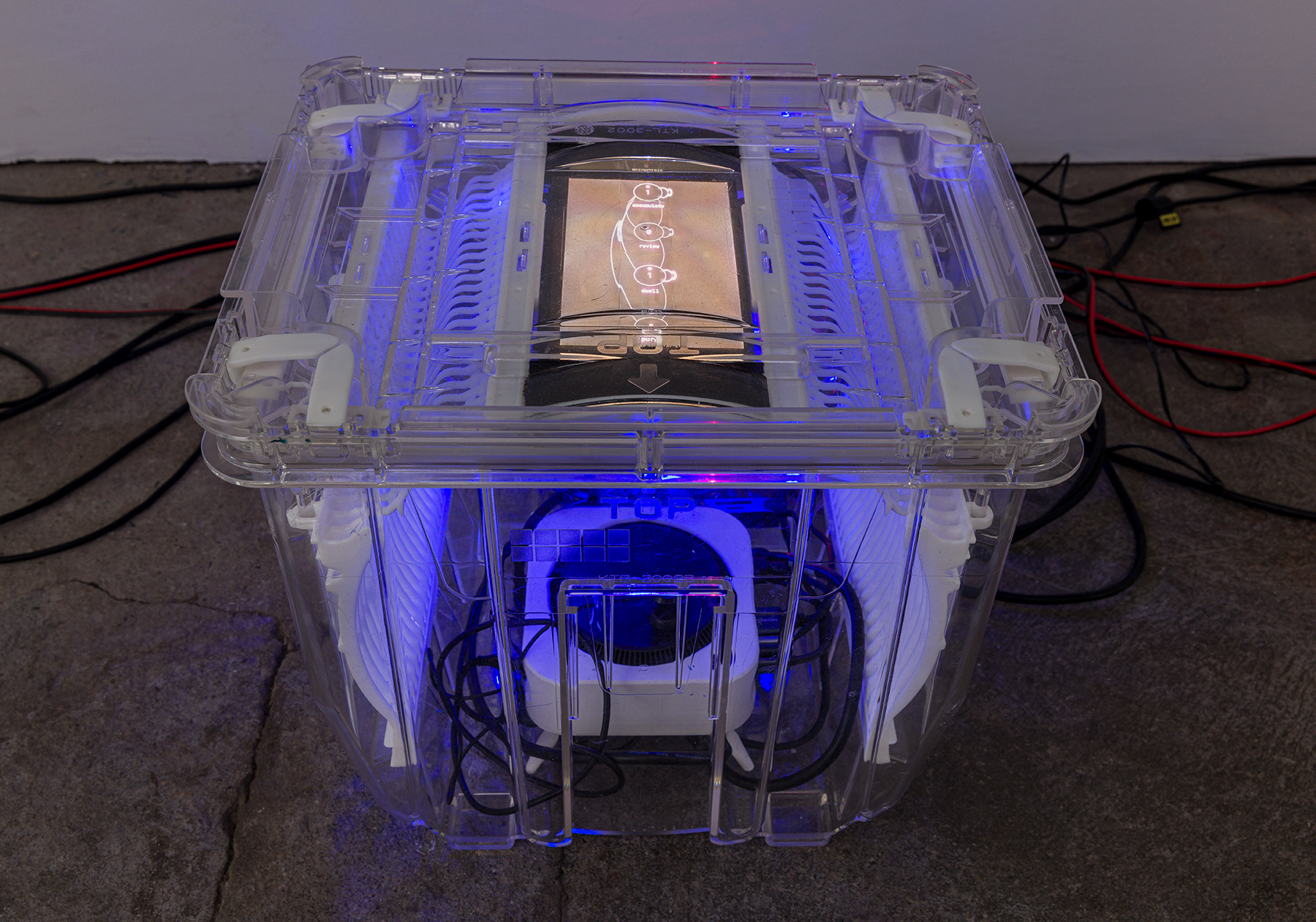
The diagram is a live simulation of Cache Machine's finite state automaton — the software brain that ran the installation at KAJE for 15 days. Four states cycle with the real transition probabilities from the show: accumulate (80% self-loop, 20% advance), review (55/35/10), dwell (80/15/5), and purge (100% reset).
The center column is the FSA. Arcs on the right are forward transitions (down the chain); arcs on the left are regressions back to accumulate. Hover a state to see its exact probabilities. Click to force a transition.
The inner ring is the software layer: comfy_loop orchestrates everything, dispatching generation prompts to ComfyUI (Stable Diffusion), which writes rendered images to cache_server (Flask + WebSocket), which streams them to browser-based viewer projections.
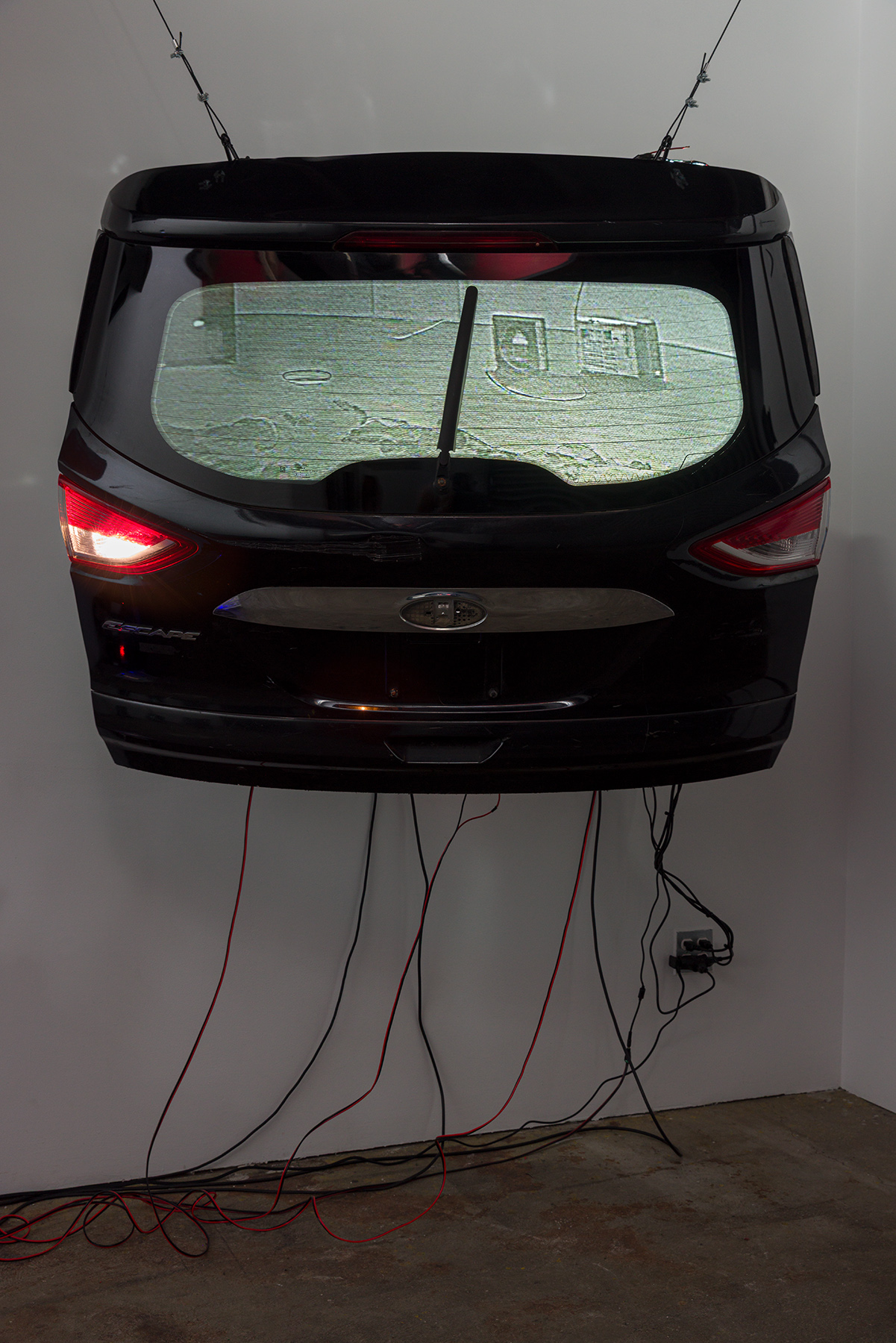
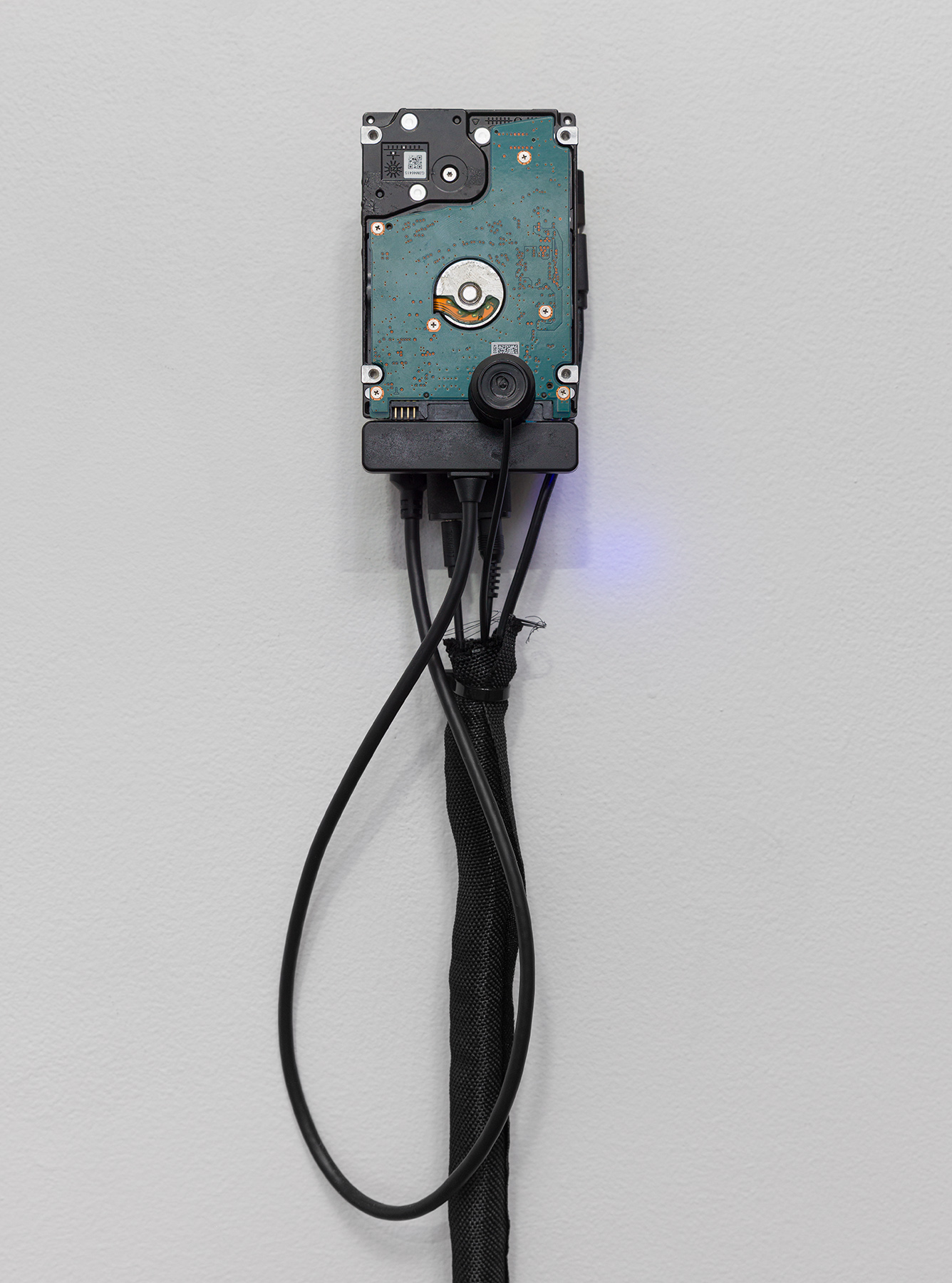
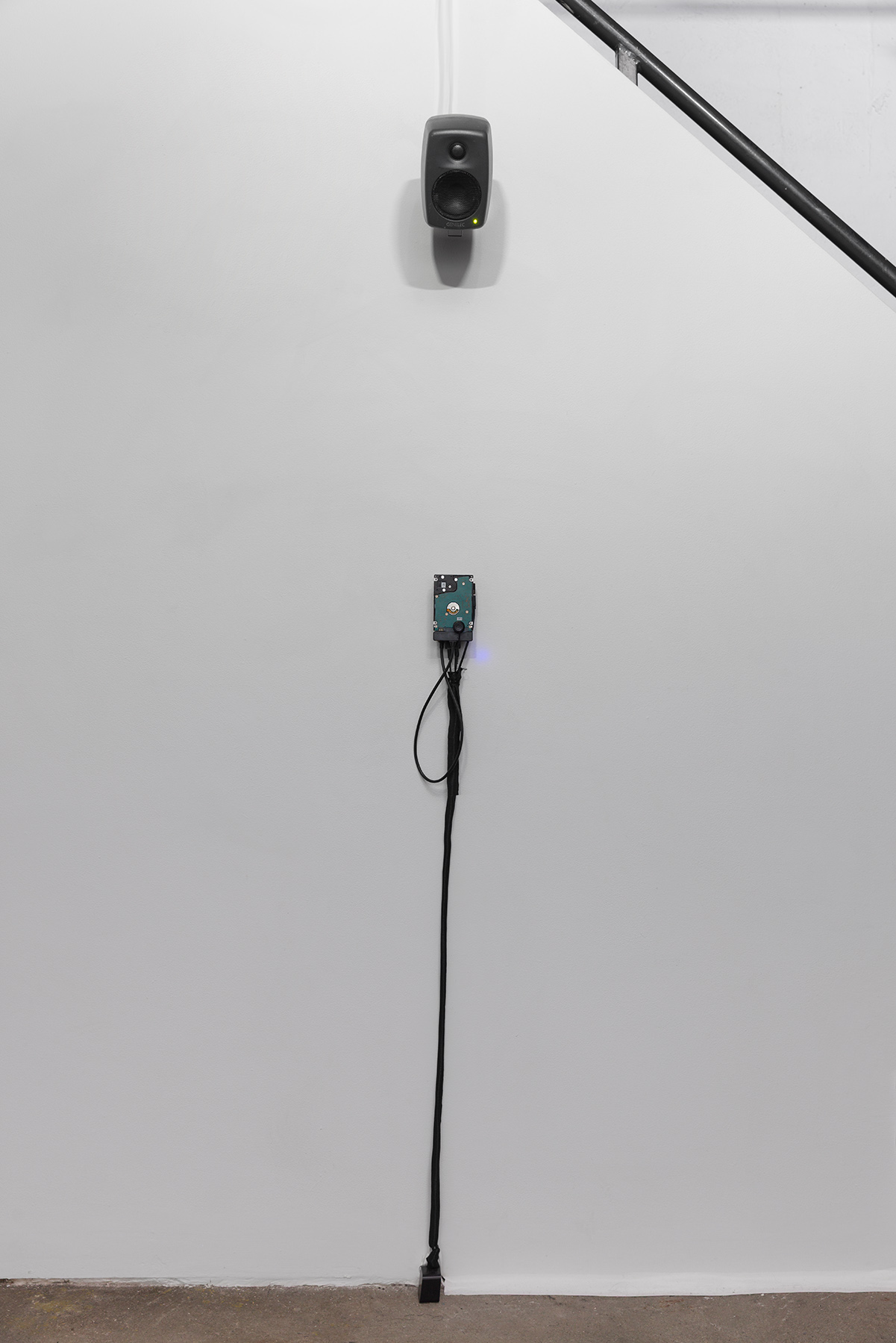
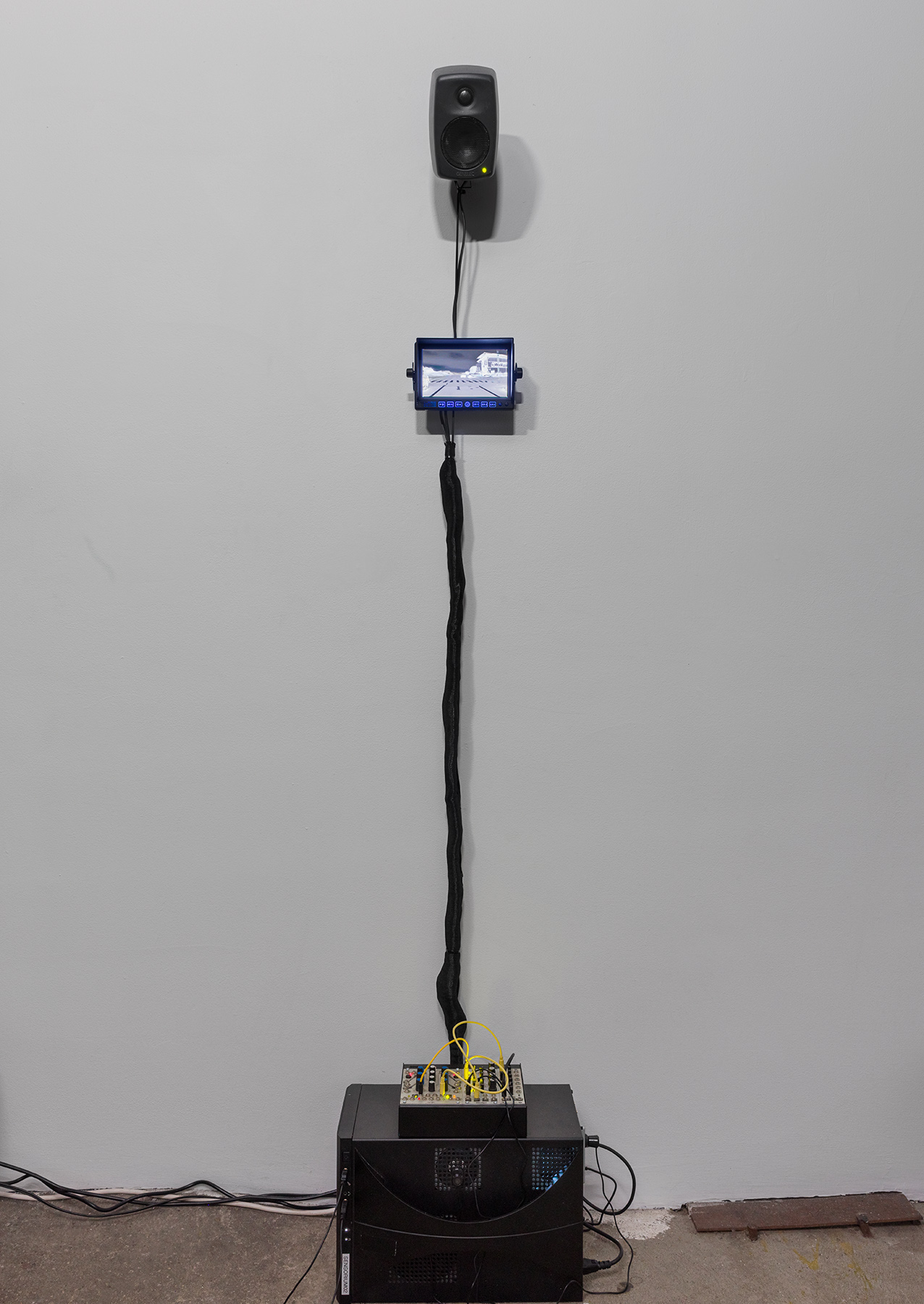
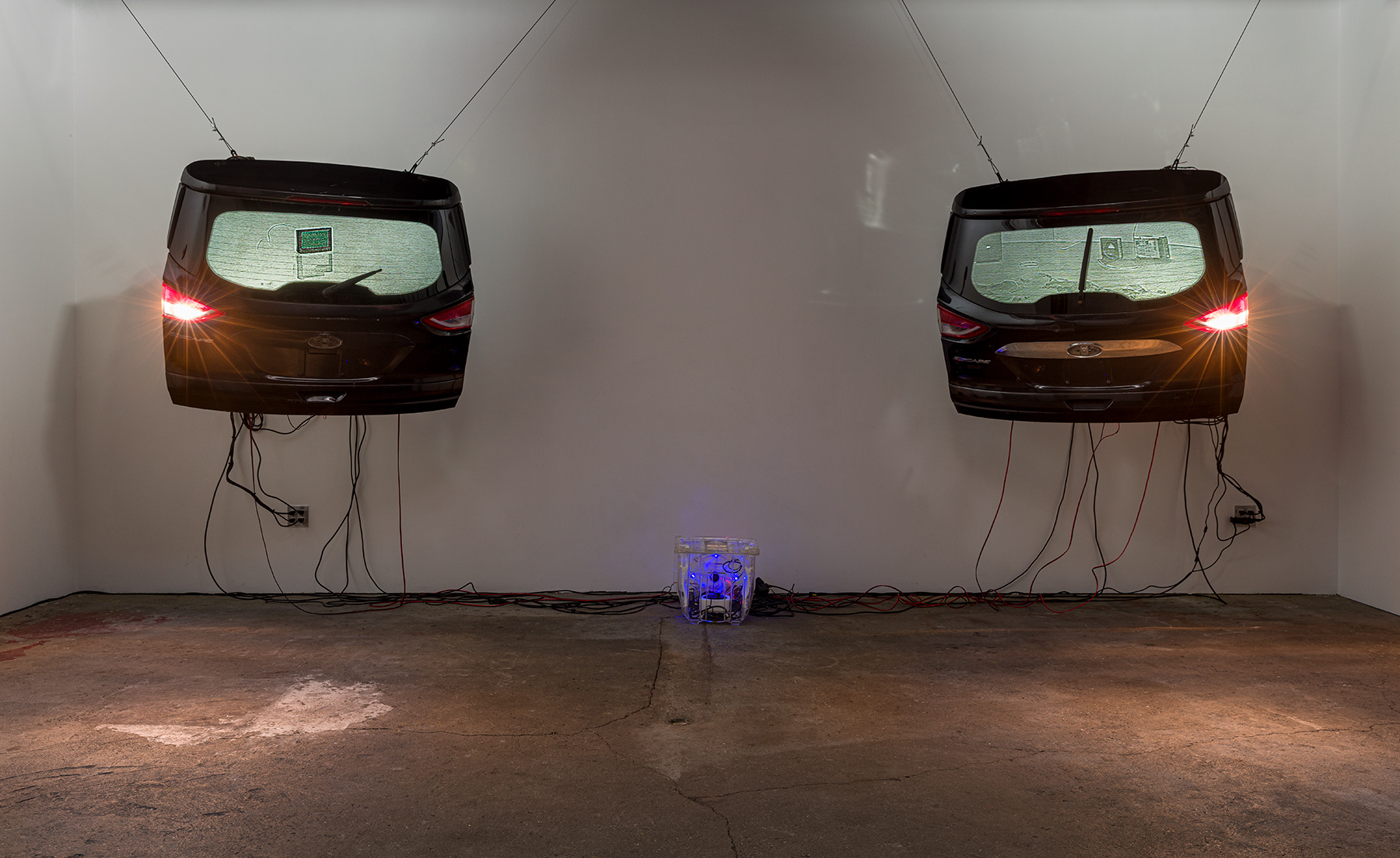
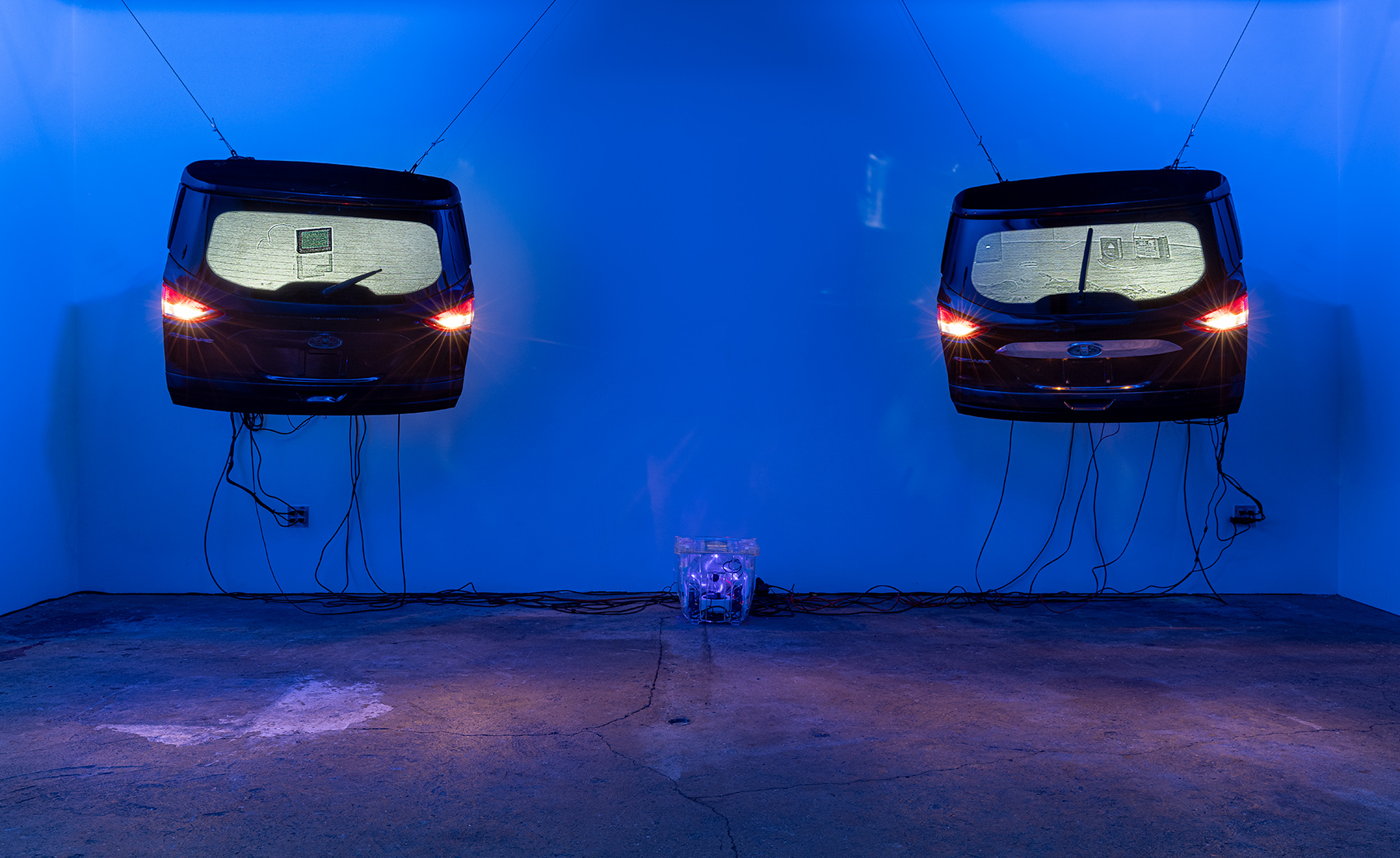
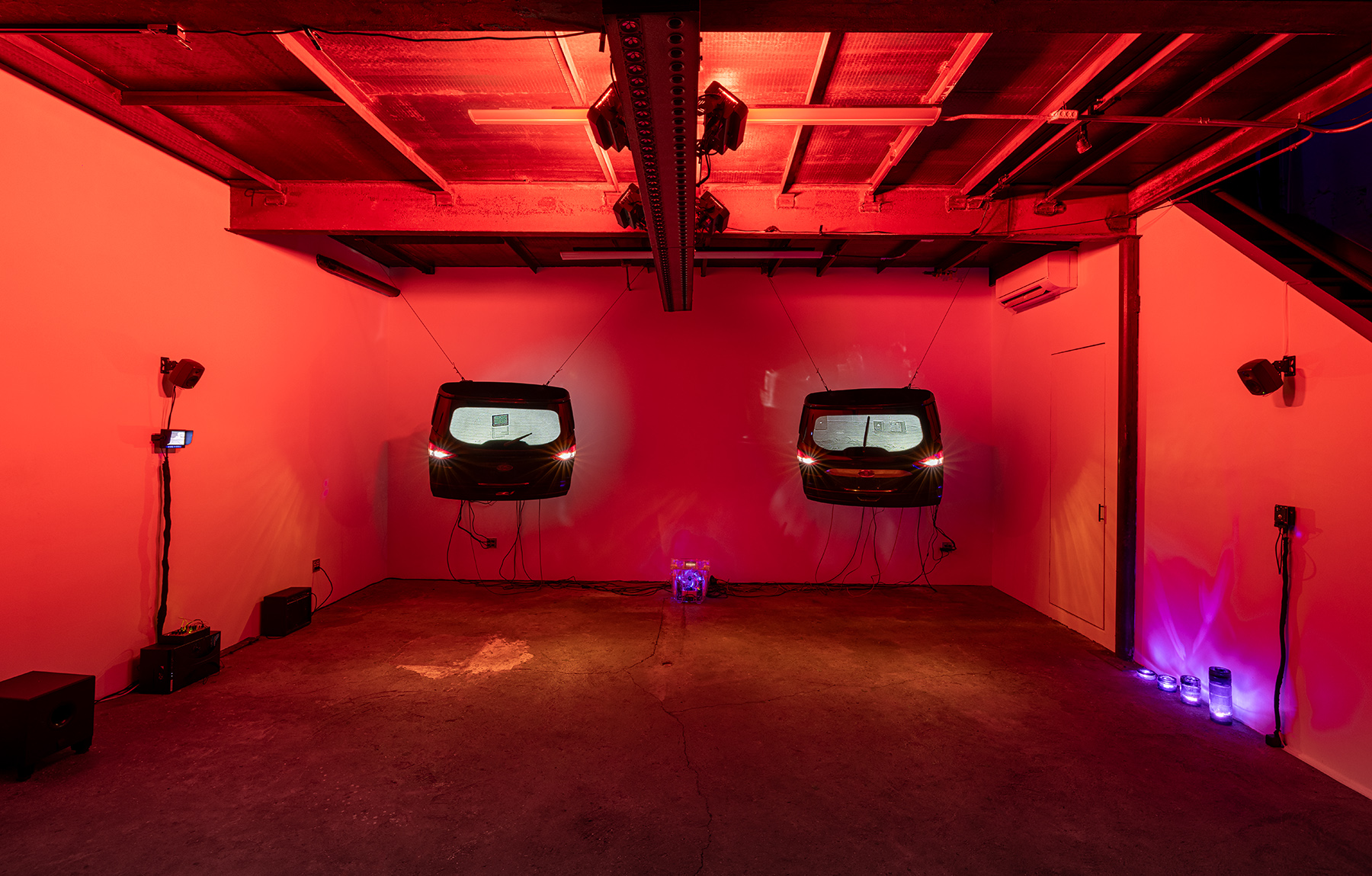
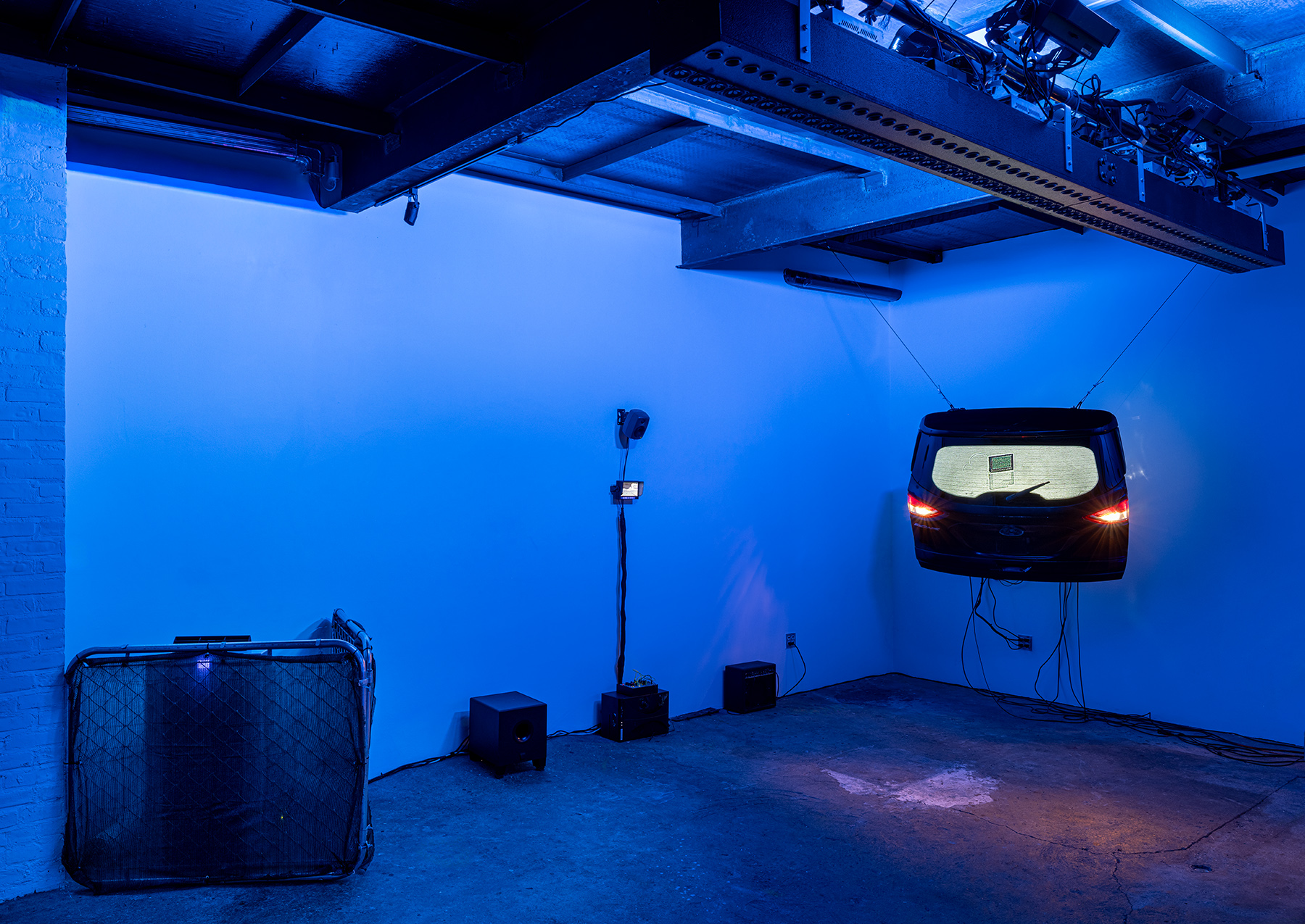
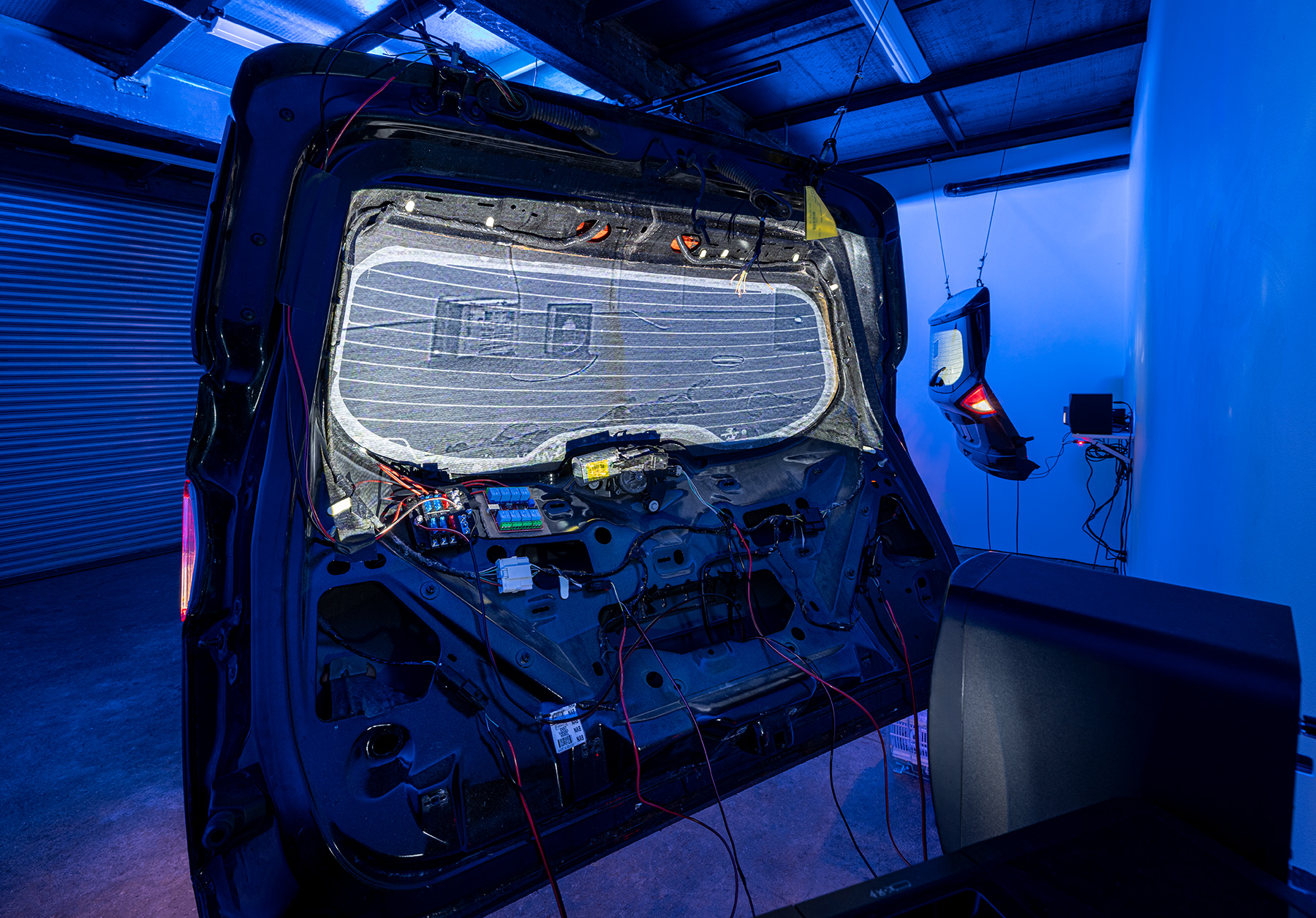
The outer ring is the hardware layer: a USB HID relay board switches 12V circuits driving car hatches (headlights/taillights) and a wiper motor. An EMF microphone captures electromagnetic field interference at 696Hz, routed through a MOTU audio interface to an 8-channel speaker array and wave field synthesis system. A Raspberry Pi + HDD provides local storage; Cloudflare Tunnel exposes the cache to remote viewers.
Each state transition fires a ripple outward from the FSA through both rings. Particles trace the data flows — API prompts, image streams, relay commands, audio signals — between components. Hardware nodes animate their real behavior: binary flicker in accumulate, rapid strobe bursts in review, ping-pong sweep in dwell, synchronized flash in purge.
Enable audio (top-right) for a synthesized soundscape: 60Hz AC mains drone, 696Hz bandpass noise (the EMF mic signature), and per-state sounds matched to the physical installation.
Software architecture, FSA viewers, interactive website, and mechatronic implementation by Johan Michalove. Curatorial concept with Ben Shirken.
Cache Machine
The acceleration of industrial "intelligence" is leaving an immaterial debris field in its wake. In digital form, we call it "slop," but its material detritus is (mostly) nameless. It's felt in the bodies that live in the shadow of data centers. The constant hum of the server racks accumulate in the ears of neighbors. The machines are always on: buzzing and grinding at 70Db, 24/7. Cache Machine is a durational performance by the debris of artificial "intelligence." It brings the sonic wasteland of machinic materialism to KAJE as a somatic activation. The installation consists of an assemblage of curated components that {generate, delete, overwrite, denoise, renoise, block, amplify, spatialize} – a set of computational moves choreographed into a generative soundscape.
Concept & sound design: Ben Shirken System architecture, software, electronics & web: Johan Michalove Video generation: Will Freudenheim Sculpture: Tee Topor Electronics, rigging & hatch installation: Duncan Davies
January 10 - January 25, 2026
Credits
Ben Shirken
Concept, theory, sound design, image generation workflow, SPAT Revolution
Johan Michalove
System architecture, display software, server infrastructure, electronics integration, projection mapping, interactive website
Will Freudenheim
Video generation
Tee Topor
Sculpture
Duncan Davies
Electronics, rigging, hatch installation
Materials
Hardware
Mac Mini M2
NVIDIA RTX 3090
MOTU Ultralite AVB
8-Channel USB HID Relay
USB Serial Relay (x2)
EMF Microphone
2x Ford Escape Hatchbacks
2x Short-throw Projectors
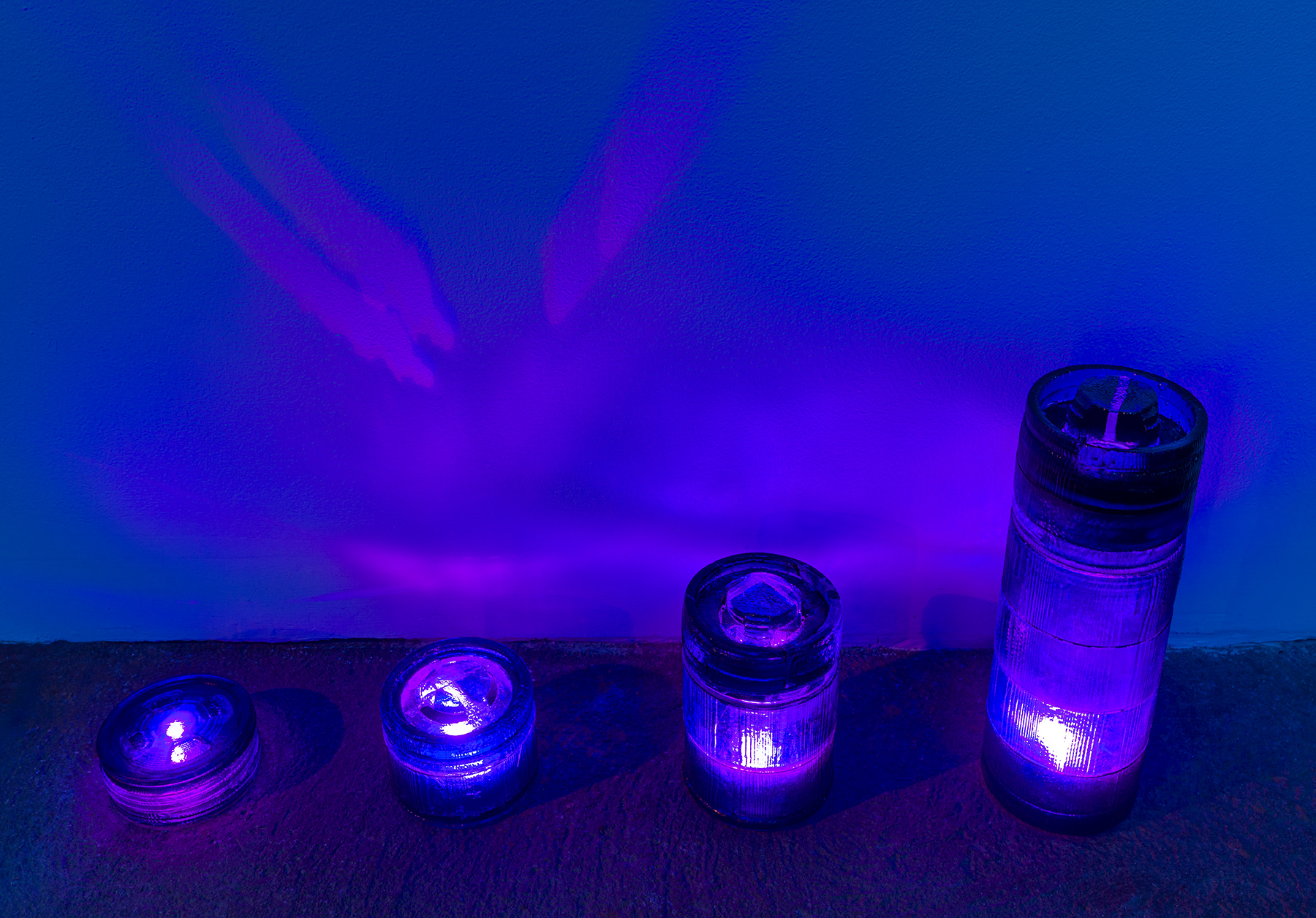
3D Printed Lithium Batteries
1TB HDD
Speakers
62-Channel Wave Field Synthesis Array
Fender Bass Amp
Yamaha Subwoofer
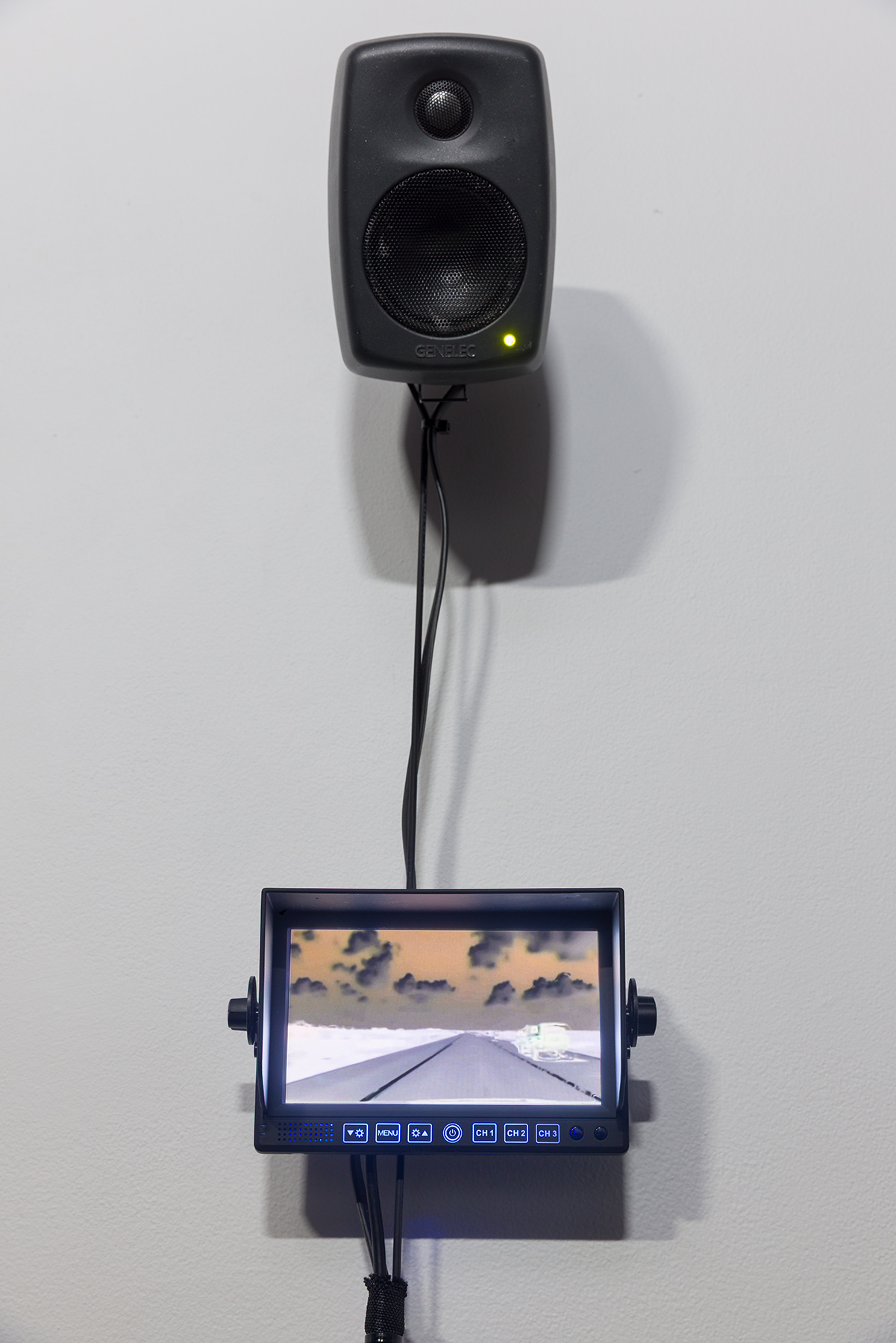
Genelec 8010a
Software
Cache Machine (custom)
ComfyUI + SD XL Turbo
Python 3.9
Pure Data
SPAT Revolution
Ableton Live
Cloudflare Tunnel
The acceleration of industrial "intelligence" is leaving an immaterial debris field in its wake. In digital form, we call it "slop," but its material detritus is (mostly) nameless. It's felt in the bodies that live in the shadow of data centers. The constant hum of the server racks accumulate in the ears of neighbors. The machines are always on: buzzing and grinding at 70Db, 24/7. Cache Machine is a durational performance by the debris of artificial "intelligence." It brings the sonic wasteland of machinic materialism to KAJE as a somatic activation. The installation consists of an assemblage of curated components that {generate, delete, overwrite, denoise, renoise, block, amplify, spatialize} – a set of computational moves choreographed into a generative soundscape. Over the course of the performance, a program cycles through the sounds of writing while erasing its own memory. A recorder captures the internal processes of a GPU rendering incomplete images. The work is a sensory scaffold. That is, an artistic intervention that takes latent forces beyond the human perceptual domain and renders them visceral, somatic, and residual. It is a direct encounter with the "sonic detritus" of the factory floor. The Cache Machine is metabolic. A "cache" is an ephemeral waypoint where local memory is stashed for temporary usage and fast access. Data is written and evicted rapidly. The installation probes at the flood of neural media which is largely digital waste as soon as it is conceived. Its natural environment is the cache, to be cyclically written and rewritten under the banner of "progress." Describing a humanity that "proves itself by destruction", Walter Benjamin observed that narratives of "progress" often obscure the "piling wreckage" it generates". Cache Machine replicates the wreckage's radiant hum. In doing so, it provides access to experiencing the (often restricted) territories of the "thinking" machines, hurling sonic psyops, dissonance, and spiking electrical strain in its wake. – Ben Shirken & Johan Michalove "A Klee painting named 'Angelus Novus' shows an angel looking as though he is about to move away from something he is fixedly contemplating. His eyes are staring, his mouth is open, his wings are spread. This is how one pictures the angel of history. His face is turned toward the past. Where we perceive a chain of events, he sees one single catastrophe which keeps piling wreckage and hurls it in front of his feet." – Walter Benjamin, 1940s Performances: • January 16: Lydo & C. Lavender, 7PM • January 24: Testu & Ivana Dama, 7PM